Atlas entry
D&D Gnoll Name Generator
Ferocious gnoll names with snapping sounds and optional bynames drawn from hunger, pack rank, scavenging, battle, and hyena-like laughter.
Generator
Gnoll Name Forge
Inspect each name, lock the ones you like, and favorite the ones you want to keep.
Name ideas
Example Gnoll names
A sample of Gnoll names from the generator above. Roll the tool for a fresh batch, then lock and save the ones that fit.
- Krezar
- Snukkark Ashsnatcher
- Ghaggoga Gnashingbreaker
- Drengaada
- Rarguuk Nightyipper
- Krigul
- Yaashula Filthgulper
- Grurkuul
- Royza Ashbiter
- Gnuya
- Krenash
- Grakkoha
- Hrirrith
- Yeppa
- Kath Bloodlaugher
- Greebruga Darkscreecher
- Zrazar Foulbiter
- Yama Wretchedeater
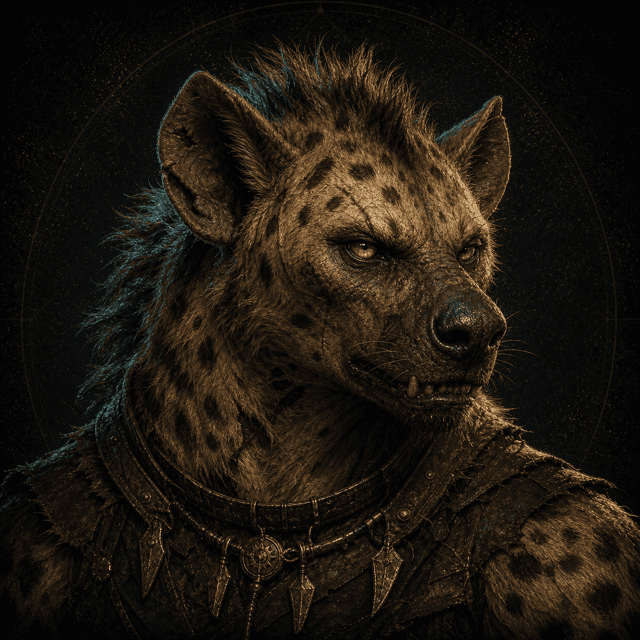
Most gnolls in D&D lore never get a name at all; the ones who do earn it through violence, and the name is said to come straight from the demon lord Yeenoghu. This generator follows that same earned-name idea but trades the official list's soft vowel openers for a harsher, growlier sound: hard clusters like zr, sn, and hr up front, paired with a violent epithet built like a battlefield title. Use the given name alone for an ordinary pack member, or add the epithet once that gnoll has a reputation worth naming.
How the name is built
The harsh consonant cluster that starts a given name, like zr, sn, gr, or hr. It's the growl up front, and this generator's signature departure from the softer official sample names.
The core syllable or two that follows the opener and carries the rest of the given name's sound.
A violent or scavenging word, like Maw, Night, or Rot, that opens the earned title tacked onto a proven gnoll's name.
The -er agent ending that closes every epithet in this pool, turning the opening word into a title meaning roughly the one who does this.
Do's and don'ts
Do
- Lean on hard consonant clusters like zr, sn, gr, and hr at the front of a given name for a proper growl.
- Save the epithet for a gnoll who has actually earned a reputation, not every rank-and-file pack member.
- Keep given names short, one to three syllables, so they read fast in combat.
Don’t
- Don't give every gnoll in a warband a full given name plus epithet; canon says most gnolls have no name at all.
- Don't split gnoll names by gender; the official sample list is shared across male and female gnolls.
- Don't invent soft, flowing gnoll names; nothing in the source material or this pool supports that sound.
- Given name, then an optional epithet: Zrurg alone, or Zrurg Mawgnawer once he's proven himself.
- Epithets pair a violent or scavenging word with an -er ending: Rot- plus feaster gives Rotfeaster.
Famous names, decoded
Tekeli-li
Icewind Dale: Rime of the Frostmaiden (Wizards of the Coast, 2020)
A former Fang of Yeenoghu turned gnoll vampire, his name is lifted wholesale from H.P. Lovecraft rather than built from the vowel-opening, two-syllable pattern in Volo's Guide. It shows Wizards will break its own naming rule for a single legendary monster where atmosphere outweighs consistency.
Rattlefang
Neverwinter Nights: Darkness over Daggerford (Ossian Studios, officially licensed D&D game, 2018)
This gnoll chieftain and shaman gets a plain English compound name, rattle plus fang, built like a title rather than drawn from the Yeenoghu-granted vowel-opening list. Even official gnoll NPCs outside the core rulebooks often get an evocative English name instead of a canon-style granted one.
'Barnabus', 'Timothy', and 'Tomelia'
Baldur's Gate 3 (Larian Studios, 2023)
Three enslaved gnolls retrained as kitchen staff, their names appear in quotation marks in-game, marking them as imposed human names rather than true gnoll identity. It's a useful contrast: this is what a name looks like when it deliberately does not follow gnoll naming convention.
Roots and elements
| Aar-, Al-, And- | opening sound in the official Yeenoghu-granted name list; every sample name in Volo's Guide to Monsters starts on a vowel | Aargab |
| Eth-, Ig-, Ot- | another vowel opener from that same official list, with no translated meaning given | Ethak |
| Imm-, Orr-, Ust- | vowel opener with a doubled or heavy middle sound, a common shape in the granted-name table | Immor |
| -ak ending | closing sound shared by three of the twelve official sample names | Andak, Ethak, Ulthak |
| -ar ending | another closing sound repeated in the official sample list | Ignar, Ustar |
| -or / -om ending | closing sound in the official list, a low vowel followed by a soft consonant | Immor, Orrom |
| two syllables | every name in the official sample table lands at exactly two syllables | O-tal, Ust-ar |
| Zr- | harsh double consonant opener used across this generator's given names, like a growl at the front of the word | Zrurg, Zreekra, Zrekuwa |
| Sn-, Hr- | breathy or hissed opener, echoes a hyena's chuff or snort | Snukkark, Hrala |
| doubled hard sound (gg, kk) | throat-heavy consonants doubled up for extra weight in the middle of a name | Gaaggook, Snukkark |
| three-syllable given names | longer names built from a harsh opener plus two more syllables, used for about a third of this generator's approved given names | Goskunuk, Zeeshula, Vruraja |
| Maw- | names the mouth or bite directly, the most repeated epithet opener in this generator's pool | Mawgnawer, Mawmauler |
| Night- | marks a hunter active after dark, the second most repeated epithet opener | Nightdrooler, Nightyipper |
| Rot- | carrion or decay imagery, the third repeated epithet opener | Rotrender, Rotfeaster |
| Grave-, Filth-, Wretched-, Ravening- | one-off descriptive openers pulled from scavenging, filth, and violence rather than repeated across multiple epithets | Graveeater, Filthgorger, Wretchedlaugher |
| -er ending | every approved epithet in this generator ends this way, turning a violent word into a title, roughly the one who does this | slinker, gorger, mauler, feaster |
| compound title structure | widely used on fan gnoll-name sites for two-part violent titles, not confirmed in any official Wizards of the Coast source, but the same logic this generator's epithet slot follows | Blood-fang, Ear-taker, Face-ripper |
Frequently asked
Do all gnolls have names in D&D lore?
No. Volo's Guide to Monsters says most gnolls have no name and no use for one. Only fangs, pack lords, and flinds, gnolls who have proven themselves, get one, and it is said to come directly from the demon lord Yeenoghu rather than a parent or a namer within the pack.
Are gnoll names different for males and females?
Not according to official material. Volo's Guide treats the name pool as shared across gnolls regardless of sex, since a name's job is to mark a dangerous individual on a battlefield, not to signal gender. Any female-specific gnoll name lists you find online are fan-made, not official.
Why do this generator's gnoll names sound so different from the Volo's Guide list?
The official list leans on soft vowel openers, like Aargab and Ulthak. This generator instead leans into harsh consonant clusters like zr, sn, gr, and hr for a growlier, hyena-adjacent sound. Both are valid; one matches canon, the other is a deliberate stylistic choice for this pool.
What is the epithet for in a gnoll name?
It stands in for the earned status canon gnolls need before they are even allowed a name. In this generator it is built as a violent or scavenging word plus an -er ending, like Mawgnawer or Rotfeaster, echoing the compound titles fan sites have long used for gnolls even though those aren't official.
Is Tekeli-li a typical gnoll name?
No, it is an outlier by design. It is borrowed from H.P. Lovecraft rather than built from the gnoll naming pattern Volo's Guide lays out, because Tekeli-li is a unique legendary monster, not a rank-and-file gnoll following the granted-name convention.